
Artificial Intelligence (AI) is revolutionizing healthcare, and AI agents are playing a crucial role in enhancing patient care, improving diagnostics, and optimizing hospital workflows. These intelligent systems operate autonomously, assisting medical professionals and ensuring efficiency in critical healthcare processes. Let’s explore how AI agents are transforming the healthcare industry with real-time examples.
What Are AI Agents in Healthcare?
AI agents in healthcare are advanced software systems capable of making data-driven decisions, automating tasks, and assisting medical professionals in providing better patient care. These agents utilize machine learning, natural language processing, and deep learning techniques to analyze vast amounts of medical data and generate actionable insights.
How AI Agents Are Transforming Healthcare
1. Enhancing Medical Diagnostics
AI agents assist doctors in diagnosing diseases with higher accuracy by analyzing medical images, lab results, and patient history. AI-powered tools, such as IBM Watson Health, have been used to detect cancerous tumors in radiology scans with remarkable precision. Google’s DeepMind has also developed an AI system that diagnoses eye diseases by analyzing retinal scans.

2. Personalized Treatment Plans
By analyzing genetic data and patient history, AI agents help create customized treatment plans tailored to an individual’s medical needs. Tempus, an AI-driven healthcare platform, uses big data analytics to personalize cancer treatments based on genetic profiles, helping doctors choose the best therapies for their patients.
3. AI-Powered Virtual Health Assistants
AI agents, such as virtual health assistants, help patients manage their health by offering reminders for medication, monitoring symptoms, and providing instant medical advice. Babylon Health, a UK-based AI-powered healthcare app, allows patients to consult an AI chatbot for preliminary medical advice, reducing the burden on hospitals and clinics.
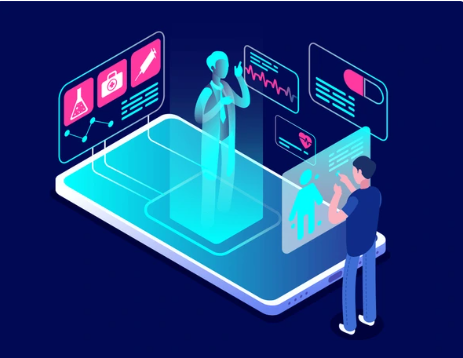
4. Automating Administrative Tasks
Hospitals and healthcare providers use AI agents to streamline administrative tasks such as appointment scheduling, medical coding, and billing. Olive, an AI-powered healthcare automation tool, is being used by hospitals in the U.S. to reduce administrative workload, allowing healthcare professionals to focus more on patient care.
5. Drug Discovery and Research
AI agents play a vital role in pharmaceutical research by analyzing complex biological data and predicting potential drug candidates. DeepMind’s AlphaFold has made significant contributions in protein structure prediction, expediting the discovery of new treatments for diseases like Alzheimer’s and Parkinson’s.

The Future of AI Agents in Healthcare
As AI technology continues to evolve, AI agents in healthcare will become more sophisticated, providing even greater accuracy and efficiency in medical practices. However, ethical considerations such as patient data privacy, regulatory compliance, and AI transparency must be addressed to ensure responsible AI adoption.
AI agents are not just an innovation but a necessity in modern healthcare. Their ability to assist medical professionals, enhance diagnostics, and improve patient outcomes makes them a game-changer in the industry. Organizations that embrace AI-driven healthcare solutions will lead the way in shaping the future of medicine.